An honest offer-comparison page helps readers choose between realistic options using the same practical criteria. If you promote that page through SurfAholics TE, make the comparison useful before asking visitors to click a recommendation. Explain who each option suits, what you actually checked, and what remains unknown.
Begin with one reader decision
Choose a specific question, such as whether a beginner needs a simple checklist or a more structured planning tool. Avoid trying to rank every product in a broad market. A focused decision makes it easier to select relevant criteria and keeps the page from becoming a collection of unrelated promotional links.
State the reader’s starting point. Someone preparing a first campaign may value straightforward setup, while an experienced operator may need exportable records or collaboration. Neither preference makes one option universally best. Tell readers which situation your comparison addresses.
Use the same criteria for every option
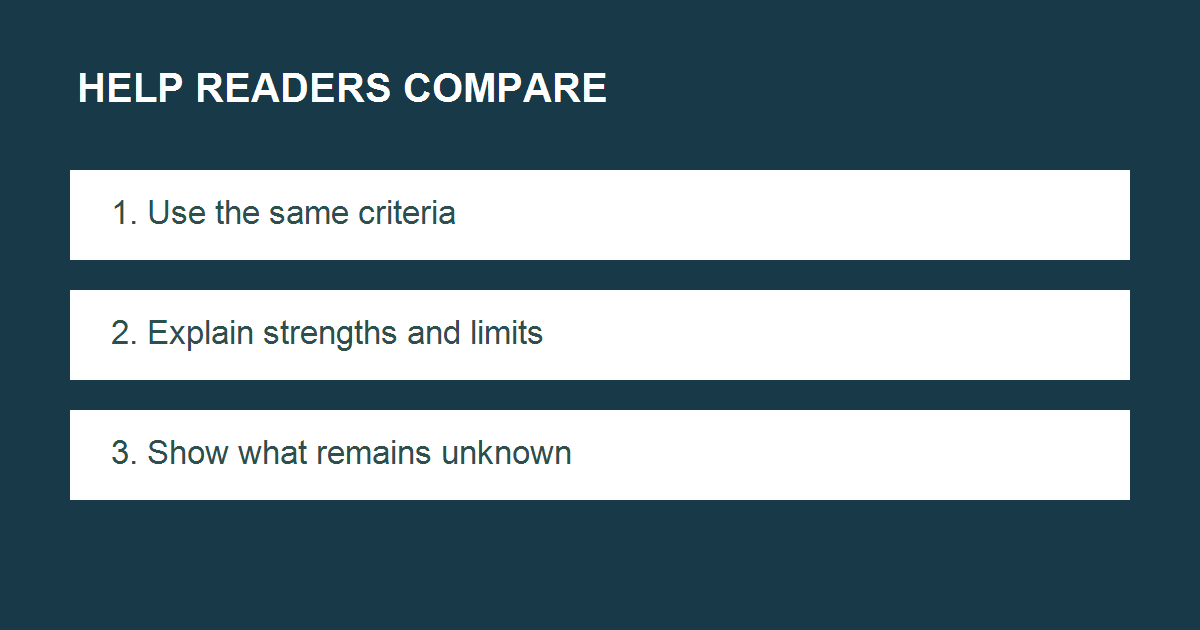
Decide what matters before evaluating the alternatives. Useful criteria might include the task supported, setup effort, required account, available help, ongoing cost, cancellation terms, and data export. Use only criteria you can describe accurately. Check current official terms for details that change rather than copying an old review.
Present the alternatives in the same order under each criterion. If you describe the limits of one option, look for the corresponding limits of the others. Leave a field marked “not verified” when you cannot establish the answer. An empty evidence gap should not become an invented advantage.
Separate observation from a vendor claim
“I exported a sample report during my test” describes something you did. “The provider says reports can be exported” describes a claim from another source. Those statements carry different evidence. Use clear wording so the reader can tell which one applies.
Record when you checked a feature or term and which plan you reviewed. A feature available on one plan may not be available on another. If you have not used a product, do not imply a personal test. Avoid numerical scores that look precise when no consistent scoring method supports them.
Include a realistic alternative
The reader may reasonably keep an existing tool, use a manual process, or postpone a purchase. Include that possibility when it fits the decision. A comparison becomes more helpful when it explains when a change would add work without solving a real problem.
For a hypothetical example, a marketer keeping notes for one campaign may find a simple document adequate. A person coordinating several campaigns with a colleague may need a shared system. This illustrates different needs; it is not a test or endorsement of any named product.
Make the recommendation conditional
Replace “everyone needs this” with a specific fit statement. For example: “Consider this option if you need a shared record and can maintain it consistently.” Follow it with a limitation, such as the setup work involved or an unanswered question the reader should check.
Keep link labels descriptive. Readers should know whether a link opens the provider’s feature page, pricing terms, or signup screen. A heading that promises a comparison should lead to a comparison, rather than sending visitors immediately to a registration form.
Review the page before promoting it
- Does the opening explain the decision and intended reader?
- Are the same criteria applied to every alternative?
- Are tests, source claims and unknowns clearly distinguished?
- Can readers see meaningful limits and a reasonable no-change option?
- Do the links reach the destinations their labels promise?
Read the page on a phone as well as a desktop. A wide comparison table can be difficult to follow on a small screen; short sections with repeated labels may be easier to use. Keep important qualifications beside the relevant recommendation so they remain visible.
Finish with one useful next step: check the current terms, try a limited test, or keep the present process until a specific need arises. The purpose of an honest offer-comparison page is an informed choice. Traffic totals alone cannot tell you whether the page helped someone make that choice.