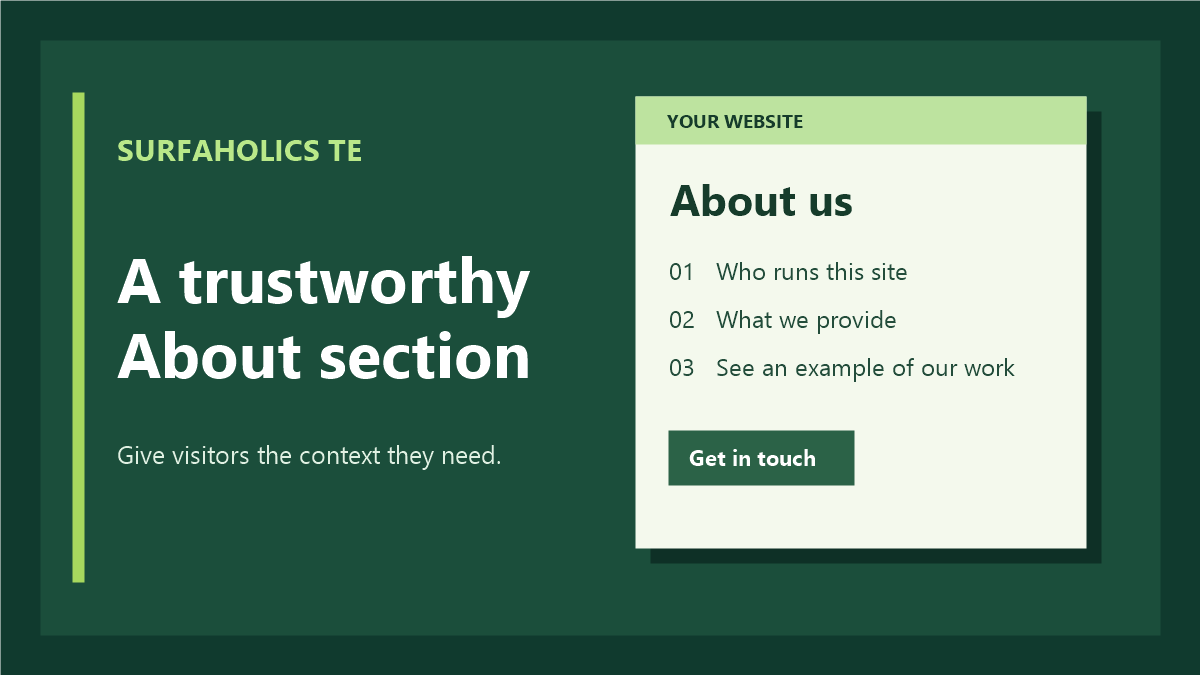
When you prepare a landing page to advertise on SurfAholics TE, give visitors a quick way to see who runs the site and why the offer is relevant to them. A short About section can answer those questions before someone subscribes, requests information, or considers an offer.
Answer five questions in your About section
- Who operates this website? Name the person or business responsible for it. Use the same name visitors see elsewhere on the page.
- What does the business provide? Describe the actual product, service, or resource in one plain sentence. Name a concrete deliverable when you can.
- Who is it for? Identify the people you serve and a situation they’ll recognize. Independent retailers preparing their first email promotion gives a reader more to work with than everyone who wants better marketing.
- What supports your claims? Offer a relevant example visitors can check, such as a sample, a walkthrough, or a portfolio item you have permission to share. Describe your role and the work you actually did.
- How can visitors learn more? Give readers one clear next step. Link to a sample, a fuller About page, or the contact section and describe what they’ll find there.
Replace broad promises with details a visitor can check
Vague: “We’re marketing experts who help businesses get amazing results. Sign up to see what makes us different.”
Clearer fictional example: “I run Cedar Lane Studio and create email templates for independent retailers. This page offers a sample product-announcement template for shops preparing their first promotion. Open the sample to see the subject line, message structure, and setup notes. For questions about adapting it to your store, use the contact form below.”
The clearer version names the operator, audience, and resource. It also gives visitors something they can inspect before deciding whether to share their email address.
Describe experience you can stand behind
If you helped build a campaign, explain which part you handled. If the resource grew out of your own work, show a sample and explain what it demonstrates. Leave out awards, qualifications, testimonials, customer counts, and earnings figures unless they’re accurate, relevant, and supported.
Give your About and contact sections separate jobs
The About section establishes identity and context. The contact section shows how to get in touch and what kinds of questions you can answer. Place a short About section near the offer and link to the contact section where it makes sense. Before sending traffic, open the page on a phone and check whether a first-time visitor can find your name, understand what you provide, and take the next step.